

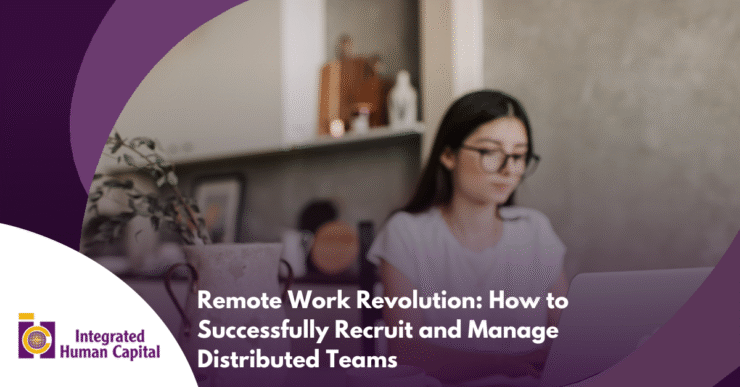
Remote Work Revolution: How to Successfully Recruit and Manage Distributed Teams
The workplace has undergone a seismic shift. What began as a temporary adaptation during the pandemic has evolved into a long-term strategy that’s redefining how businesses operate. According to Gallup, roughly 56% of U.S. workers work remotely at least part of the time, and this trend is expected to remain stable through the decade.
For employers, remote work presents enormous opportunities — broader talent pools, reduced overhead, and greater flexibility — but also new challenges in recruiting, onboarding, and managing distributed teams effectively.
Expanding Access to Global Talent
The greatest advantage of remote work is the ability to recruit beyond geographic boundaries. Businesses can now hire top performers regardless of location, opening doors to diverse skill sets and perspectives.
To compete effectively in this environment:
-
Adopt a skills-first mindset: Focus on competencies, not proximity. Assess candidates based on their ability to perform, collaborate, and adapt remotely.
-
Broaden your sourcing channels: Use specialized job boards, professional networks, and staffing partners who understand remote recruitment nuances.
-
Leverage cross-border expertise: Partner with workforce solutions providers experienced in compliance and payroll management across jurisdictions—especially when hiring international talent.
Onboarding Remote Teams for Success
Remote employees thrive when onboarding is structured, engaging, and consistent. While some companies still treat remote onboarding as “virtual paperwork,” successful organizations design a holistic experience that equips new hires with the tools and support they need to integrate quickly.
Effective onboarding for distributed teams includes:
-
Digitized onboarding workflows for documents, training modules, and company policies.
-
Welcome calls and virtual team introductions to establish early relationships.
-
Role clarity and milestone check-ins during the first 30, 60, and 90 days.
-
Remote mentors or onboarding ambassadors to answer questions and reinforce culture.
A well-structured onboarding process builds confidence and improves retention—especially when employees aren’t physically in the office.
Managing Productivity and Engagement Remotely
Managing distributed teams successfully requires a shift from hours-based oversight to outcome-based leadership. This means setting clear goals, communicating consistently, and creating a supportive remote culture.
Best practices for managing remote teams include:
-
Establish measurable objectives and define what success looks like for each role.
-
Use consistent communication rhythms, such as weekly team meetings or one-on-one check-ins.
-
Support employee well-being by encouraging balance, boundaries, and mental health awareness.
-
Leverage collaboration tools for project management, document sharing, and video communication.
But technology isn’t enough. Remote employees rely on intentional communication and recognition to feel valued. Celebrating wins, sharing feedback regularly, and maintaining visibility across teams strengthen morale and performance.
Partnering with Experts in Remote Workforce Solutions
As organizations continue to evolve, managing remote and hybrid teams effectively requires expertise in compliance, payroll, and cross-border talent acquisition. That’s where strategic staffing partners make all the difference.
Integrated Human Capital (IHC) helps employers recruit, onboard, and manage distributed teams with confidence. Our customized workforce solutions streamline the hiring process, ensure E-Verify compliance, and support consistent service delivery across the U.S. and Mexico.
Whether you’re scaling your remote workforce or building cross-border operations, IHC provides the flexibility, efficiency, and expertise you need to thrive in the digital age.
Ready to unlock the power of remote talent?
Contact IHC’s staffing specialists today.