


Healthcare Staffing in November: Preparing for Winter Patient Surge
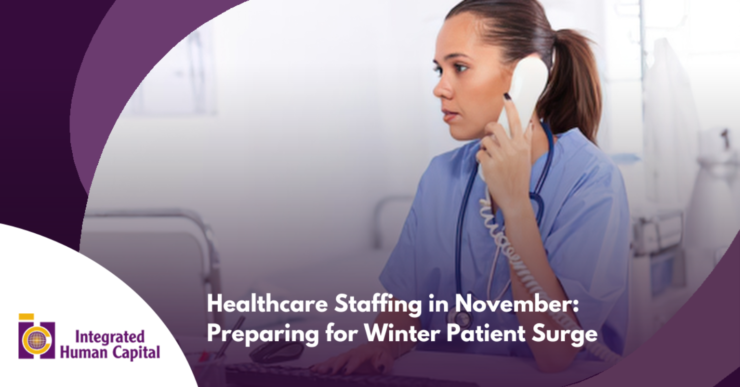
November is a critical planning month for Directors of Talent Acquisition at multi-location healthcare systems. Flu season, respiratory illness, elective procedure scheduling and holiday-related emergency visits can increase patient volume across facilities before teams are fully prepared.
For healthcare systems managing nursing, clinical support and administrative staffing, the goal is not just to fill shifts. The goal is to project demand early, protect existing staff from burnout and build enough flexibility to keep patient care moving through winter.
Why November Healthcare Staffing Planning Matters
Winter patient surge rarely affects only one department. Emergency departments may see higher visit volume, inpatient units may need additional nursing coverage, clinical support teams may need more respiratory, imaging or patient care staff, and administrative teams may face heavier scheduling, intake and billing demands.
For multi-location systems, this creates a larger challenge. One facility may be managing flu-related admissions while another is short on administrative support or losing staff before the holidays. Without a systemwide staffing plan, leaders can end up moving people reactively instead of planning coverage strategically.
Employers can use staffing services to support short-term coverage needs while maintaining flexibility across departments and locations.
How to Project Contingent Staffing Needs
Start by reviewing last winter’s staffing data by facility, department and shift. Look at patient census, overtime usage, callouts, open shifts, time-to-fill and turnover during November through January.
Then separate staffing needs into three categories:
Immediate coverage needs: Roles needed to keep units staffed during peak patient volume.
Clinical support gaps: Positions that support patient flow, documentation, imaging, respiratory care, intake or scheduling.
Permanent hiring needs: Roles that are likely to remain open after seasonal pressure passes.
This process helps leaders decide where temporary coverage makes sense and where direct hiring or temp-to-hire may be the better option. For harder-to-fill permanent roles, IHC’s direct placement staffing services can help support long-term hiring needs.
Temporary Coverage vs. Permanent Hiring
Temporary healthcare coverage can be cost-effective when the need is tied to a defined winter surge. It helps reduce overtime, protect existing staff and keep departments covered without adding permanent headcount too early.
Permanent hiring makes more financial sense when the role supports long-term operations, patient care continuity or chronic vacancy needs. If a department has relied on temporary coverage for the same role for months, that may signal a permanent staffing gap.
Temp-to-hire can help bridge both needs. It gives healthcare systems coverage during peak demand while allowing leaders to evaluate performance, attendance, patient interaction and team fit before making a long-term offer. This can be especially useful when holiday departures create permanent openings that need to be filled carefully.
Employers comparing hiring models can review IHC’s guide on direct hire versus contract staffing for additional context.
Retention Should Be Part of the Winter Staffing Plan
Winter staffing is not only about adding people. It is also about keeping the staff you already have.
Burnout can rise when teams face heavier patient volume, extra shifts and holiday scheduling pressure. Talent leaders should work with department managers to monitor overtime, callouts, engagement concerns and early signs of turnover.
A proactive plan may include flexible scheduling, float pool support, faster backfill processes and clearer communication with staff about surge expectations.
Prepare Before Patient Volume Peaks
Healthcare systems that plan in November are better positioned to manage winter demand without relying on last-minute hiring decisions.
Integrated Human Capital helps healthcare employers evaluate temporary coverage, temp-to-hire and permanent staffing strategies across multiple facilities and departments.
Ready to prepare your workforce for winter patient surge?
Contact Integrated Human Capital today to discuss your healthcare staffing needs.